Understanding the Different Types of Restraining Orders
What standard of proof applies, and why that matters
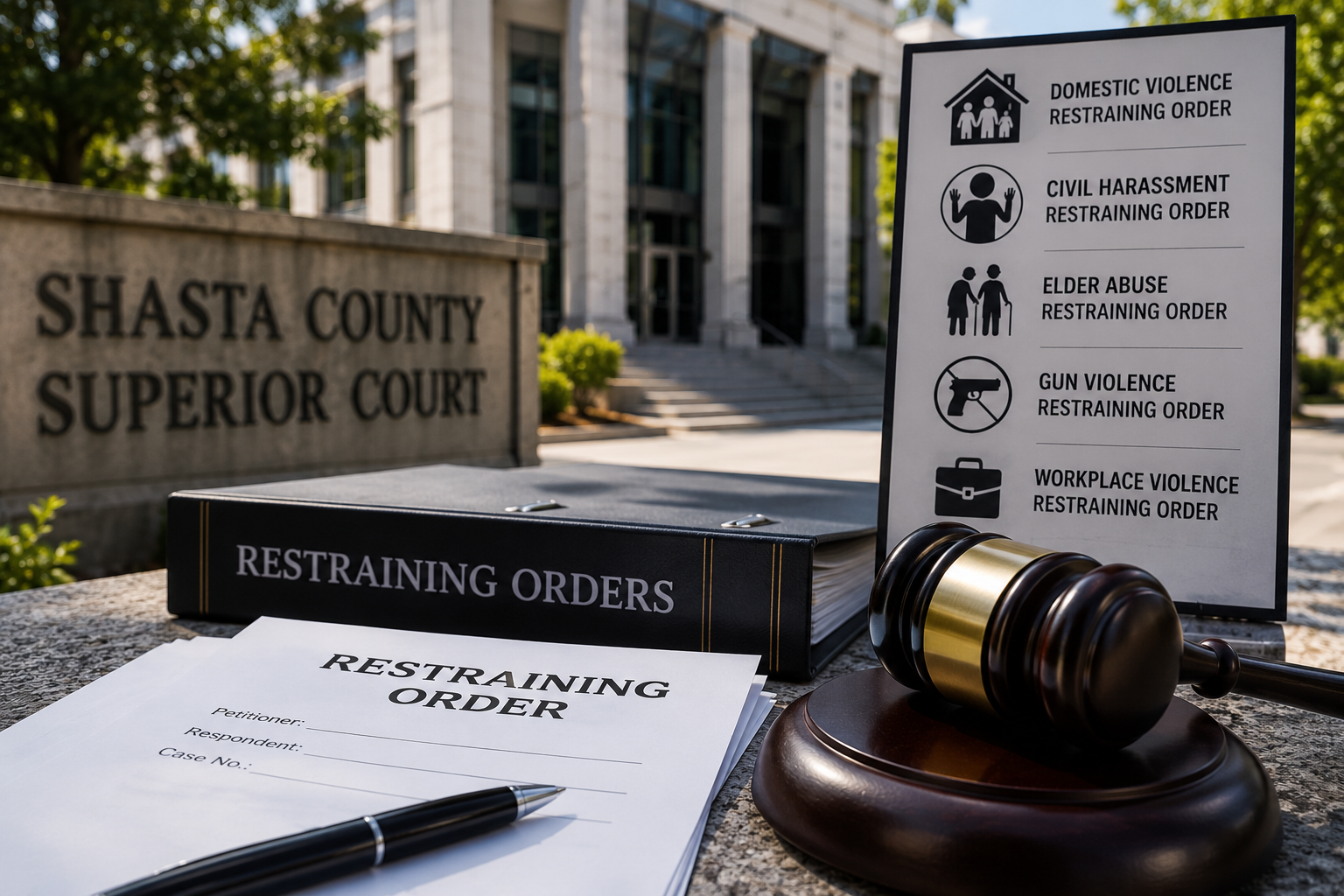
Not All Restraining Orders Are the Same: Understanding the Different Types of California Restraining Orders
Many people are surprised to learn that there is no such thing as a single "restraining order."
California law recognizes several different types of restraining orders, each created for a different purpose. Although they may appear similar on the surface, they are governed by different statutes, involve different legal standards, have different evidentiary rules, and often require different litigation strategies.
These differences are not merely technical. They can determine what evidence the judge may consider, what the petitioner must prove, and ultimately whether a restraining order is granted or denied.
If you are involved in a restraining order case in Shasta County, understanding these distinctions—and working with an attorney who understands them—can make all the difference.
The Five Most Common Types of Restraining Orders:
Domestic Violence Restraining Orders (DVRO)
A Domestic Violence Restraining Order is designed to protect individuals who have a qualifying relationship with the respondent, such as:
- A current or former spouse
- Someone you have dated
- A person with whom you share a child
- A close family member
- Someone with whom you currently or previously lived in a qualifying domestic relationship
Because these cases arise out of domestic relationships, the law governing them is different from other restraining orders.
One significant difference is the burden of proof. Generally speaking, a Domestic Violence Restraining Order is decided under the preponderance of the evidence standard. In other words, the petitioner must persuade the court that it is more likely than not that the alleged abuse occurred.
Domestic violence proceedings are also governed by their own evidentiary rules. For example, hearsay evidence that may be admissible in another type of restraining order proceeding may not necessarily be admissible in a DVRO hearing. Knowing when to object—and when not to—is often critical.
Civil Harassment Restraining Orders (CHRO)
Civil Harassment Restraining Orders apply when the parties do not have the type of close relationship required for a DVRO.
These cases often involve:
- Neighbors
- Former friends
- Acquaintances
- Strangers
- Coworkers (outside the workplace violence statutes)
Although many people assume these cases operate exactly like domestic violence restraining orders, they do not.
For example, Civil Harassment cases generally require proof by clear and convincing evidence, a higher burden of proof than the preponderance standard applicable in domestic violence cases.
The evidentiary rules are also different. California law permits the court to receive certain hearsay evidence in Civil Harassment proceedings. Understanding how to admit—or challenge—that evidence can significantly affect the outcome of the hearing.
Elder Abuse Restraining Orders
California provides special protections for elders and dependent adults who are victims of abuse, neglect, abandonment, financial exploitation, or other forms of mistreatment.
These cases often involve complicated family relationships, caregivers, conservatorships, financial disputes, or allegations of undue influence.
Because elder abuse cases frequently involve medical records, financial documents, and caregiving arrangements, they often require careful preparation and a detailed understanding of the governing statutes.
Gun Violence Restraining Orders (GVRO)
Gun Violence Restraining Orders are unique because they focus primarily on whether an individual poses a significant danger of causing personal injury by possessing or accessing firearms.
These proceedings may be initiated under circumstances involving allegations of threats, concerning behavior, or escalating violence.
Unlike many other restraining orders, the principal consequence is often the temporary surrender or prohibition of firearms and ammunition.
Because these cases involve both constitutional rights and public safety concerns, they require careful attention to the specific statutory requirements governing Gun Violence Restraining Orders.
Workplace Violence Restraining Orders
A Workplace Violence Restraining Order differs from every other restraining order because the employer—not the individual employee—typically files the petition.
These cases are intended to protect employees who have experienced violence, threats of violence, or credible threats occurring in connection with the workplace.
Determining whether the legal requirements have been satisfied often requires careful analysis of the alleged conduct, the employment relationship, and whether the statutory elements have been established.
Why These Differences Matter
Many people mistakenly believe that if they have handled one restraining order, they understand them all.
That simply is not the case.
Imagine two hearings involving nearly identical facts.
In one courtroom, the judge is deciding a Domestic Violence Restraining Order under the preponderance of the evidence standard.
In the next courtroom, the judge is deciding a Civil Harassment Restraining Order under the clear and convincing evidence standard.
The evidence required to prevail may be different.
The objections available may be different.
The strategy may be different.
Even the way witnesses are questioned may be different.
An attorney who approaches every restraining order as though the rules are identical risks overlooking important legal issues that could affect the outcome of the case.
Local Experience Matters in Shasta County
In addition to understanding California's restraining order statutes, it is equally important to understand how these cases are handled in the local courts.
Every county develops its own procedures, scheduling practices, and courtroom customs. Attorneys who regularly appear in Shasta County become familiar with those local practices and understand how to efficiently prepare cases for hearing.
While every judge decides each case independently and based on the law and evidence presented, familiarity with local procedures, filing requirements, courtroom expectations, and evidentiary issues can help ensure that your case is presented as effectively as possible.
Why Experience Matters
Restraining order hearings often move quickly. In a single hearing, the court may be asked to decide disputed facts, rule on evidentiary objections, determine witness credibility, and issue orders that can remain in effect for years.
These proceedings can affect:
- Your ability to possess firearms.
- Child custody and visitation.
- Employment opportunities.
- Professional licenses.
- Housing.
- Your reputation.
- Future court proceedings.
Because every type of restraining order has its own legal framework, it is important to work with an attorney who understands not only restraining order litigation generally, but the unique rules governing the specific type of restraining order involved in your case.
Jacob Levin Law – Representing Clients in Restraining Order Cases Throughout Shasta County
Whether you are seeking protection or defending against a restraining order, understanding the specific type of restraining order at issue is critical. The applicable burden of proof, the evidentiary rules, and the governing statutes may be very different depending on the type of case before the court.
At Jacob Levin Law, we represent both petitioners and respondents in Domestic Violence, Civil Harassment, Elder Abuse, Gun Violence, and Workplace Violence restraining order proceedings throughout Shasta County and Northern California. Our goal is to ensure that every case is prepared with a thorough understanding of the law, the evidence, and the procedures that apply to that particular type of restraining order—not simply with a one-size-fits-all approach.